
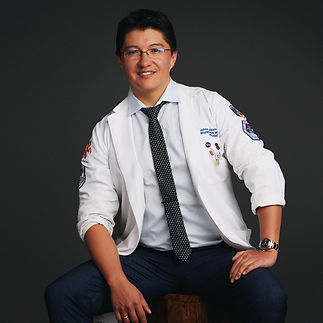
Andrés Caicedo
Associate Professor, Director of the Biomedicine Institute, Universidad San Francisco de Quito USFQ
Research Interest:
Mitochondrial Transfer Mitochondrial Transplantation Regenerative Medicine Mesenchymal Stromal Cells (MSCs) Cell-to-Cell Communication Extracellular Mitochondria Exosomes and Extracellular Vesicles Aging and Longevity Skin Regeneration and Wound Healing Space Biology / Microgravity Research Cell-Free Biomarkers (cfDNA, mtDNA) Biomanufacturing for Advanced Therapies
PhD : Universidad San Francisco de Quito USFQMontpellier, France
Funding Sources : The key support that allowed me to establish my lab and transition back to Latin America came from the Universidad San Francisco de Quito (USFQ). With their commitment to innovation and scientific leadership, I was able to create and consolidate the Biomedical Discovery Lab, a dynamic space where young scientists are trained to push the boundaries of regenerative medicine. In parallel, I launched the Dragon Biomed Initiative, which bridges academia and biotechnology to develop pioneering approaches in mitochondrial transfer, advanced therapies, and space biology. This institutional backing not only enabled me to return, but also to transform knowledge into opportunities for the region.

About Her Research
Dr. Caicedo explores how cells communicate to preserve and restore life. His research focuses on mitochondrial transfer between cells—one of the most fascinating mechanisms behind tissue resilience. As tissues age or face disease and environmental stress, their regenerative ability declines. By uncovering how and why mitochondria move between cells, his lab aims to understand their role in tissue repair, wound healing, and biological aging, and whether this process can be reactivated or enhanced through mitochondrial transplantation. Their ultimate goal is to transform these insights into regenerative therapies that help cells recover vitality and extend healthy life.
Training & Return Journey
After earning his bachelor's degree in Biology from Pontificia Universidad Católica del Ecuador, Andrés received an Ecuadorian scholarship to pursue his master's at the University of Montpellier in France, working with Dr. Jean-Marc Lemaitre's team. He continued with a PhD supported by the French Ministry of Education and postdoctoral research at the Institute of Biotherapies in Montpellier. His greatest motivation to return was the aspiration to establish his own research team with the freedom to explore pioneering ideas, particularly those related to mitochondrial transfer and transplantation. Returning gave him the opportunity to build a research and innovation ecosystem, foster international collaborations, and create opportunities for young scientists.
Navigating Challenges
The absence of a fully integrated research and innovation ecosystem is one of the biggest barriers. Government, academia, and industry are only beginning to connect, limiting both national confidence in local innovation and long-term infrastructure investment. In Ecuador, this translates to limited funding and access to specialized equipment. His team has focused on building essential research infrastructure from the ground up, developing proof-of-concept projects that demonstrate innovation's value, forging strong international collaborations, and launching spin-offs and start-ups that bridge discovery with application.
Funding & Support
He received invaluable support from both Ecuador and France through competitive programs. Upon returning, the commitment of Universidad San Francisco de Quito (USFQ), national initiatives like CEDIA, international collaboration from the Air Force Office of Scientific Research, and private partners have been instrumental in establishing and sustaining his laboratory.
Advice to Young Scientists
"The context in Latin America can sometimes challenge our professional ambitions—but perseverance and purpose can turn limitations into momentum. Focus relentlessly on building your skills and capacities, stay active in scientific networks, and never hesitate to reach out and connect. Every collaboration begins with a single conversation. Set your goals as high as you can, and if opportunities don't come easily, create them. Take every chance to grow—even if it's not your first choice—because each experience adds to the foundation you'll stand on later. Above all, stay faithful to your passion for discovery. Progress often happens in small steps, but what matters is to keep moving forward with courage, curiosity, and conviction."